Created by fey
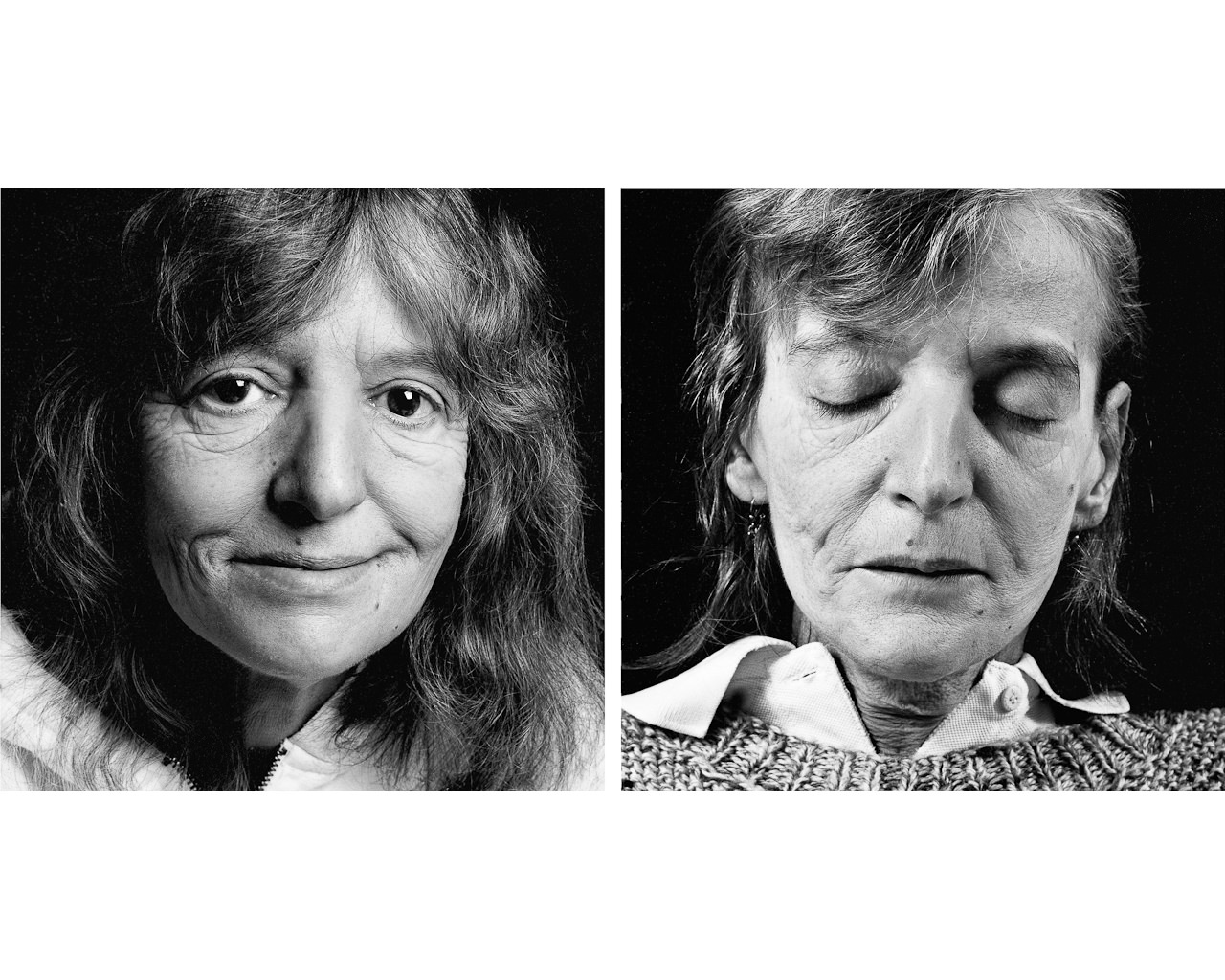
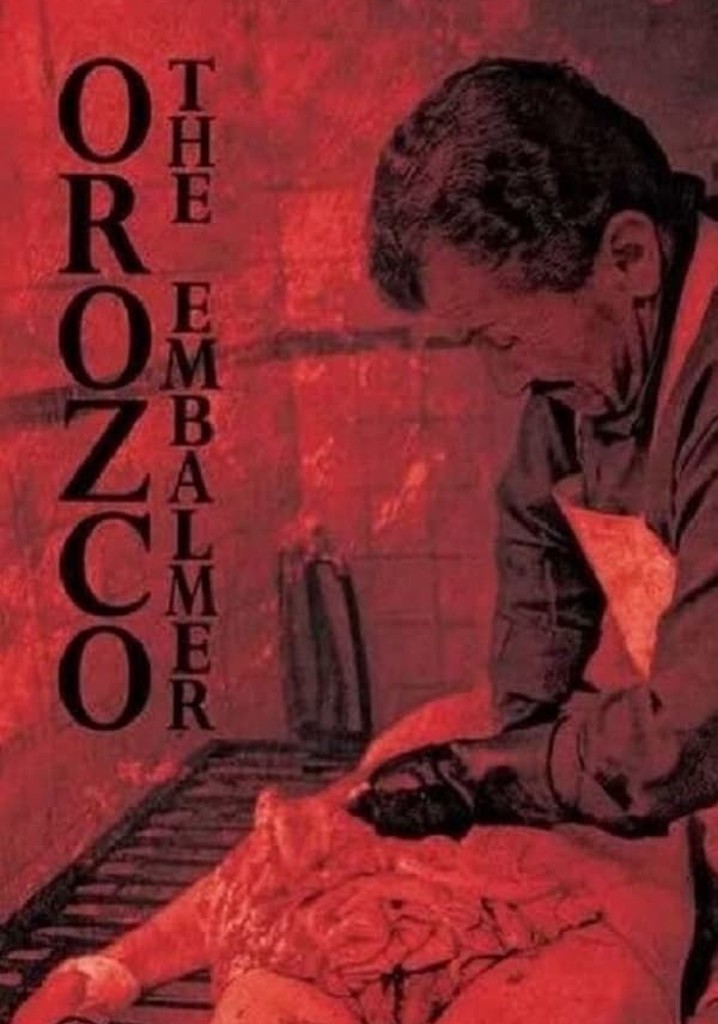
This documentary project evolved in collaboration with my wife, the journalist Beate Lakotta. We sought permission from terminally ill patients in various hospices to accompany them during the final days and weeks of their lives, equipped with a tape recorder and a camera in order to learn something about dying. They all consented to being portrayed just before and just after their death.
We worked for over a year in hospices in Berlin and Hamburg. We are very grateful to those who participated in the project, and especially to the portrayed individuals and their relatives.
(Fuente)
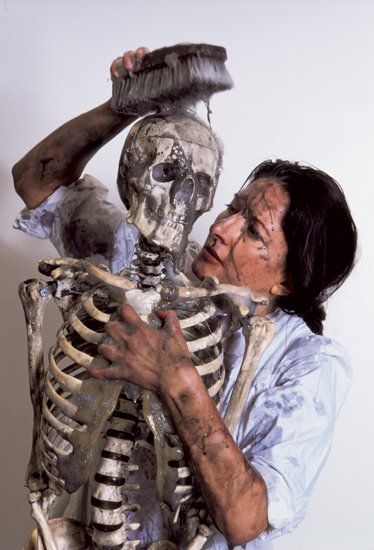
Cleaning the Mirror #1 (1995) is composed of five stacked monitors playing videos of a haunting performance in which Abramović scrubs a grime-covered human skeleton on her lap. Rich with metaphor, this three-hour action recalls, among other things, Tibetan death rites that prepare disciples to become one with their own mortality.
(Fuente)
In the performance, Abramović sits with a skeleton on her lap; next to her is a bucket filled with soapy water. With her right hand, she vigorously brushes the different parts of the skeleton. She is dressed in white, her clothing becoming progressively drenched in the mixture of soapy water and greyish grime.
[...] Through the process of being cleaned, the colour of the skeleton becomes lighter, whereas the dirt which once coated the bones starts to cover Abramović. The distinction between dead and alive therefore starts to blur, hinted at in the work’s title. For Abramović, the skeleton metaphorically represents ‘the last mirror we will all face’ (quoted in Marina Abramovic: Performing Body, exhibition catalogue, Studio Stefania Miscett, Rome 1998, p.20). The continuous loop of the video and sound simulates the never-ending looping of the universe and the inevitability of death, a much-used structural device throughout the artist’s performances.
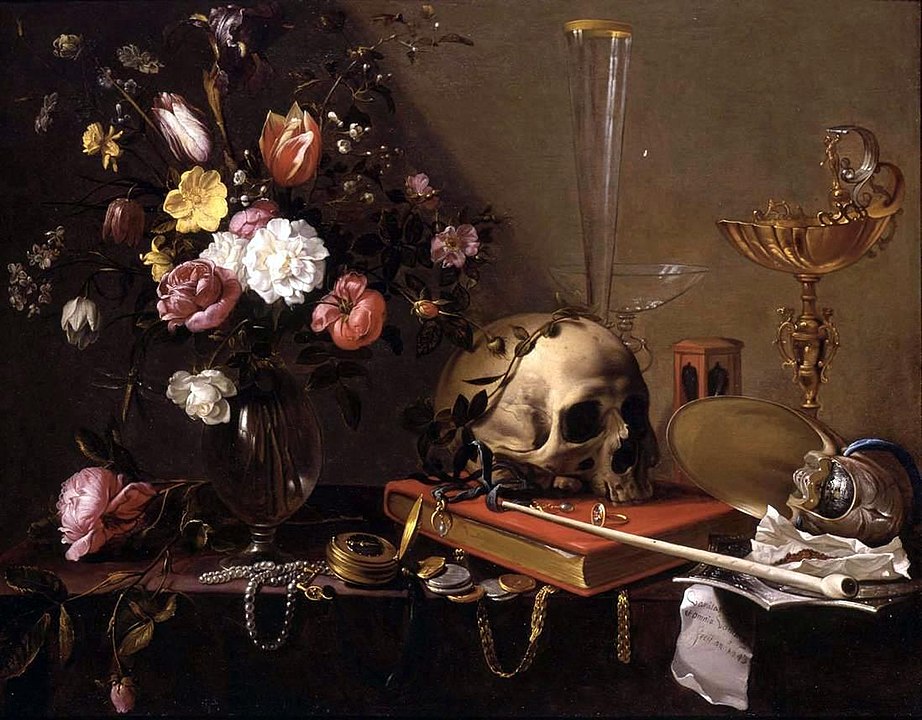
[...] Death and the passing of time are the major themes addressed in this work, equivalent to the ‘memento mori’ tradition in historical still-life painting in which a skull represents human frailty.
[...] To face death could be interpreted as ‘cleaning the mirror’.
(Fuente)
http://muybridgeshorse.com/2018/09/13/kellie-smith/
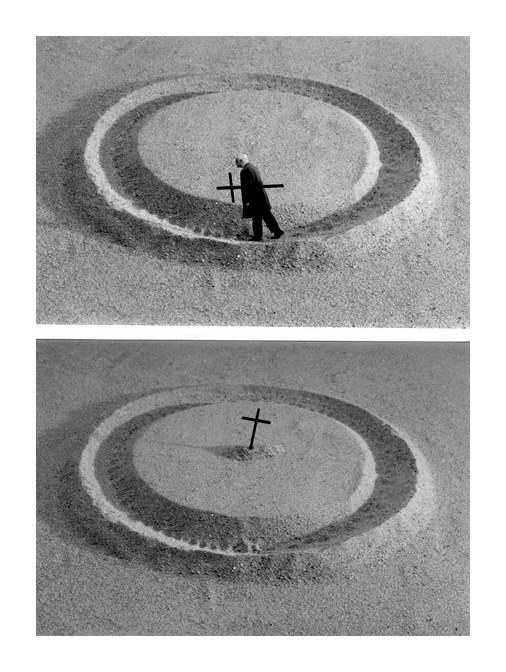
Marina Abramović has already planned her own funeral, which will incorporate her final performance work, live music, a colourful dress code and plenty of black comedy.
In a keynote speech in Sydney during her 12-day residency for Kaldor Public Art Projects, Abramović – in good health at 67 – read out her manifesto, concluding that “an artist should die consciously without fear” and that “the funeral is the artist’s last piece before leaving”.
Revealing her own funeral scenario (“You should think about everything”), she said an artist must give instructions “so everything is done the way he wants”.
(Fuente)
“Un artista debería morir conscientemente, sin miedo. Debería observar los símbolos de su obra en busca de señales sobre diferentes escenarios de muerte. Un artista debería dejar instrucciones para su funeral, de manera que todo se haga como él lo desea. El funeral es la última obra del artista antes de partir. Un artista debe ser consciente de su propia mortalidad”, dijo.
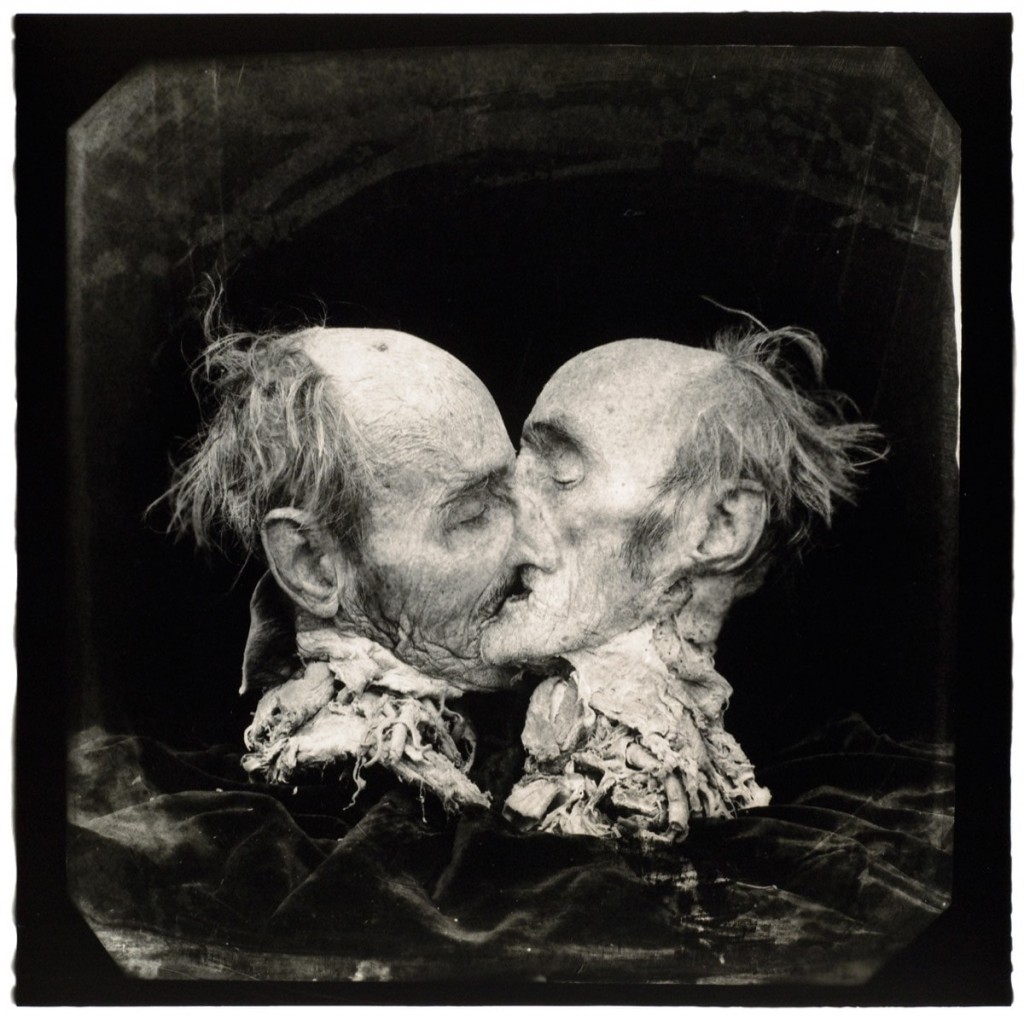
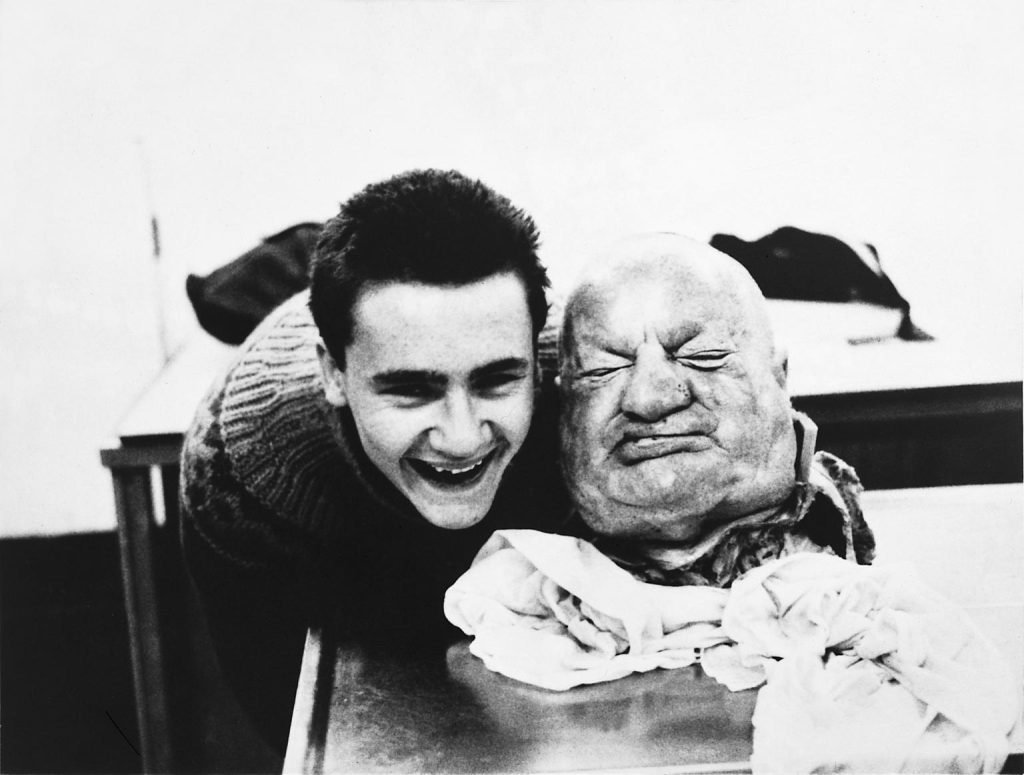
With Dead Head is a black and white photograph of the artist when he was a teenager, posing with the head of a corpse. In 1992 he recounted the making of the image:
It’s me and a dead head. Severed head. In the morgue. Human. I’m sixteen ... If you look at my face, I’m actually going: ‘Quick. Quick. Take the photo.’ It’s worry. I wanted to show my friends, but I couldn’t take all my friends there, to the morgue in Leeds. I’m absolutely terrified. I’m grinning, but I’m expecting the eyes to open and for it to go: ‘Grrrrraaaaagh!’.
I was doing anatomy drawing. I took some photos when I shouldn’t have done. It was ten years ago. But I just suddenly thought ... to me, the smile and everything seemed to sum up this problem between life and death. It was such a ridiculous way of ... being at the point of trying to come to terms with it, especially being sixteen and everything: this is life and this is death. And I’m trying to work it out.
(Hirst and Burn, p.34.)
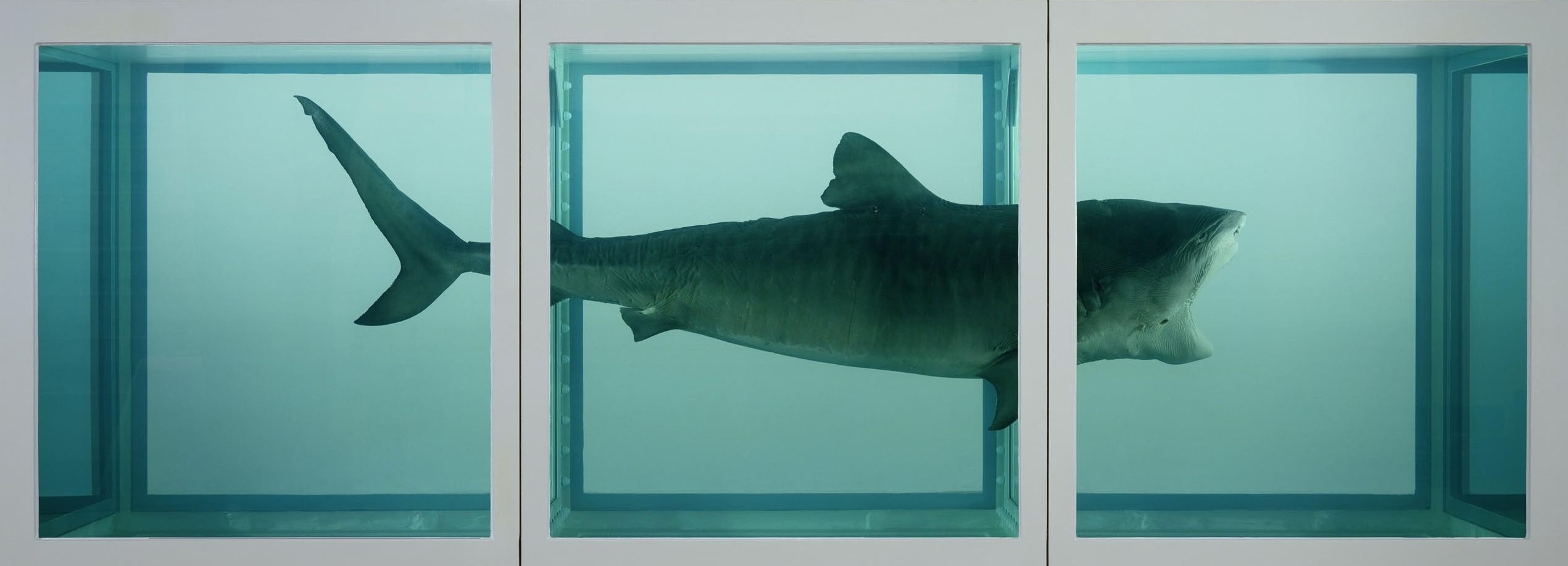
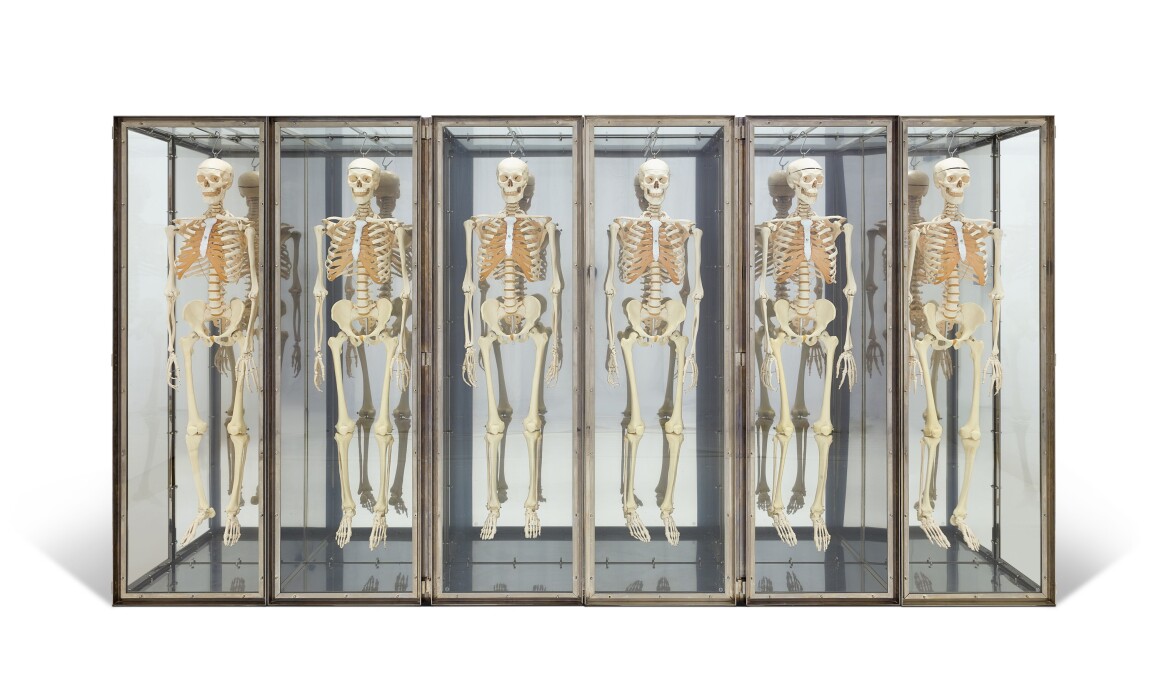
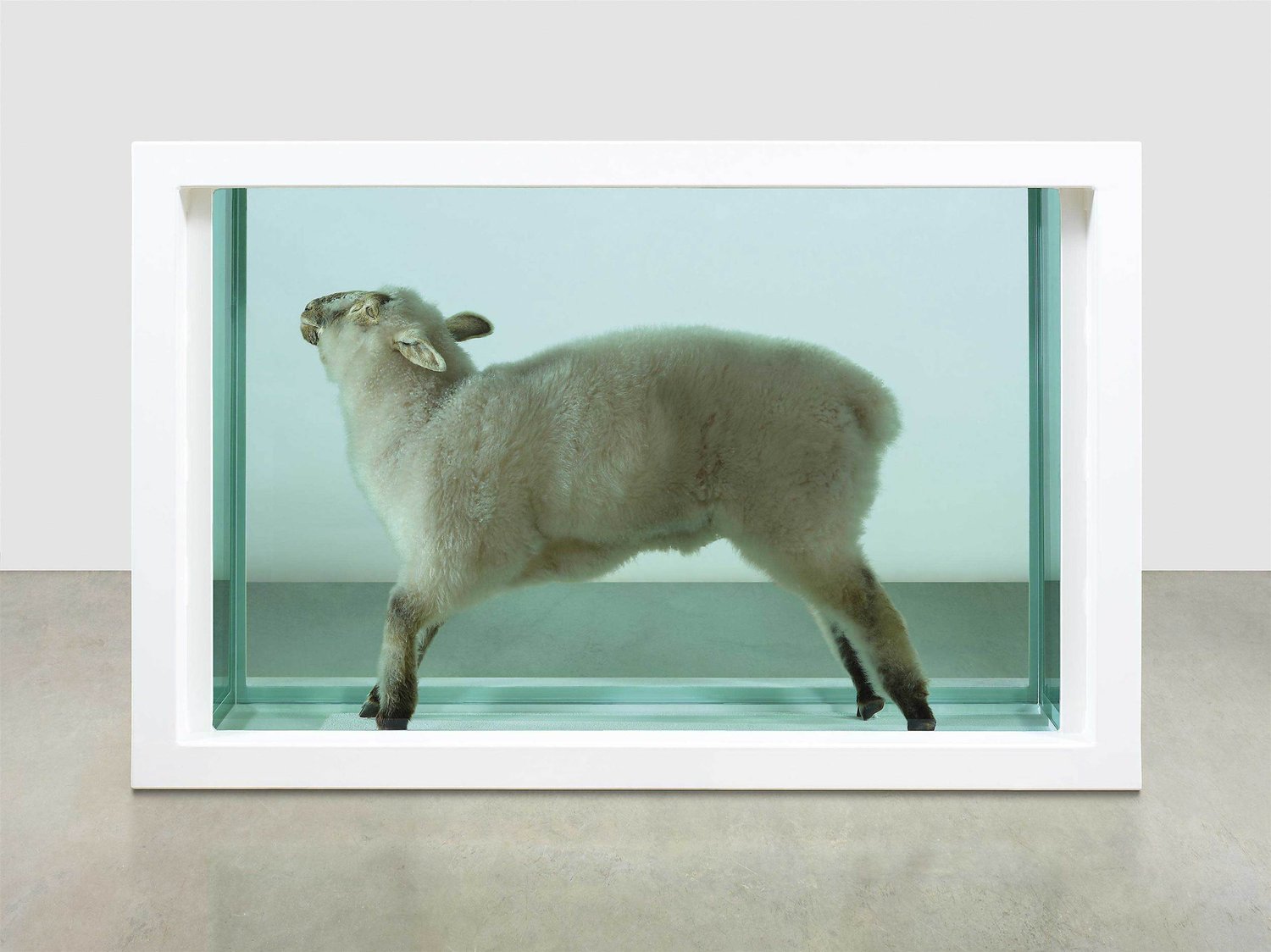
Hirst selected the photograph and enlarged it in 1991, the year of his first two groundbreaking solo exhibitions in London. At this time, he was setting up the central polemic on which his work is founded – the split or relationship between life and death and the unresolveable mystery of the point where one ends and the other begins. His first solo show, In and Out of Love, set a binary scene that contrasted white paintings from which butterflies hatched and flew around with coloured canvases incorporating dead butterflies hung next to ashtrays full of cigarette butts. Later that year, Hirst reproduced With Dead Head in the catalogue for his exhibition at the Institute of Contemporary Arts entitled Internal Affairs. Here he presented the two opposing strands of his work: spot paintings (see P13034–P13056) and butterfly paintings (see AR00045) offering a light-hearted celebration of life; and sculptural vitrines, such as The Acquired Inability to Escape (T12748), evoking the darker mood that was to lead to such works with animal carcasses as Mother and Child Divided 1993 (T12751) and Away from the Flock 1994 (AR00499) that inevitably refer to death and decay. A third central theme in Hirst’s oeuvre – fundamental to the making of With Dead Head – featured in a solo exhibition of the same year in Paris – When Logics Die at Emmanuel Perrotin Gallery. Here gruesome photographs of suicide victims were juxtaposed with medical equipment on utilitarian tables, introducing the artist’s fascination with medical science. During the same period (1989–92), he presented medicine cabinets stacked with pharmaceuticals as sculptures, culminating in the full room-sized installation, Pharmacy 1992 (T07187). The Impossibility of Death in the Mind of Somebody Living – the title of one of Hirst’s most famous sculptural vitrines (the eight-foot tiger shark in a tank) also created in 1991 – remains the driving preoccupation in Hirst’s work. He has explained:
When I was really young, I wanted to know about death and I went to the morgue and I got these bodies and I felt sick and I thought I was going to die and it was all awful. And I went back and I went back and I drew them. And the point where death starts and life stops, for me, in my mind, before I saw them, was there. And then when I’d seen them and I’d dealt with them for a while, it was over there again. It’s like, you know, I was holding them. And they were just dead bodies. Death was moved a bit further away ... the idea about death, you know when you’re actually confronted with that kind of thing – all these kinds of images – it just gets relocated somewhere else ...
In our lives, we’re separated from corpses, so you think, Oh, that’s where death is. And there’s a sort of respect. And then when you get to the mortuary and you look at them ... the people aren’t there. There’s just these objects, which [don’t] look ... like real people. And everyone’s putting their hands in each other’s pockets and messing about, going wheeeeeeyy! with the head ... it just isn’t there. It just removes it further.
(Hirst and Burn, pp.36 and 52.)
With Dead Head derives some of its strength as an image from formal oppositions in its composition: the young Hirst’s head of dark hair contrasts with the bald pate of the old man; his mouth is open in a wide smile, whereas the corpse’s mouth is firmly clamped shut; Hirst’s body extends invisibly into dark fabric in the background of the photograph, while a crumpled white cloth (suggesting a shroud) in the foreground stands in for the dead man’s absent body. The teenager Hirst’s cheeky, if terrified, grin as he lowers his face to the level of the mysteriously severed head, is partly echoed in the hint of a smile in the unknown man’s expression, suggesting complicit humour in the fear and horror evoked by the contemplation of the physical reality of death. In 1991 Hirst enlarged the photograph taken of him by an anonymous friend and released it in an edition of fifteen. ARTIST ROOM’s copy is the sixth in the edition. In 1999 he created a further edition of 1000 prints in a smaller size.
(Fuente)
https://www.sothebys.com/en/articles/whispers-of-immortality-in-damien-hirsts-visions-of-death
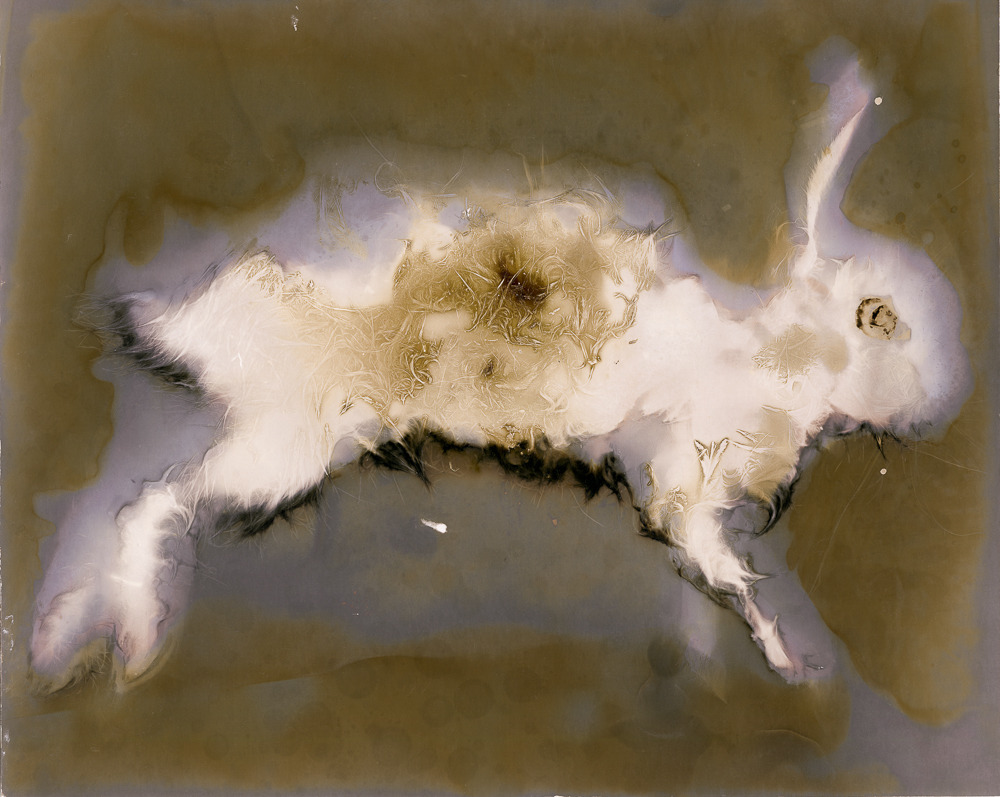
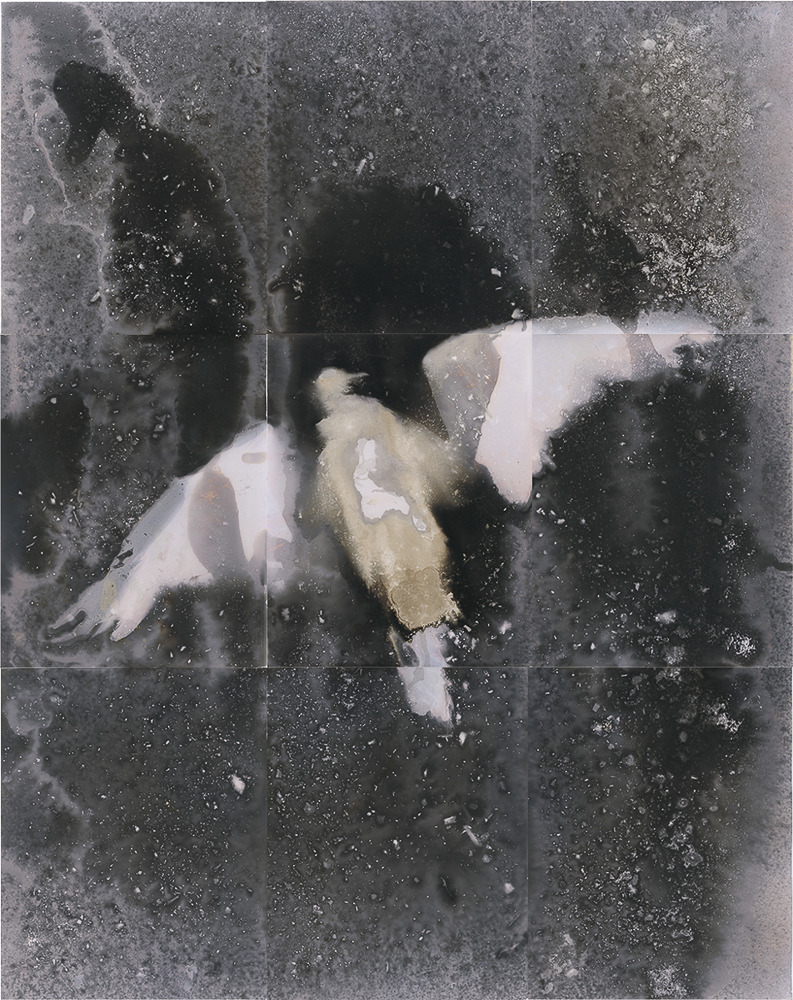
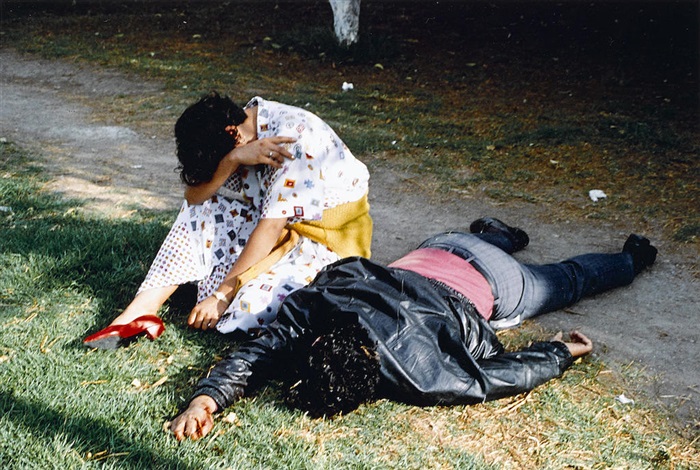
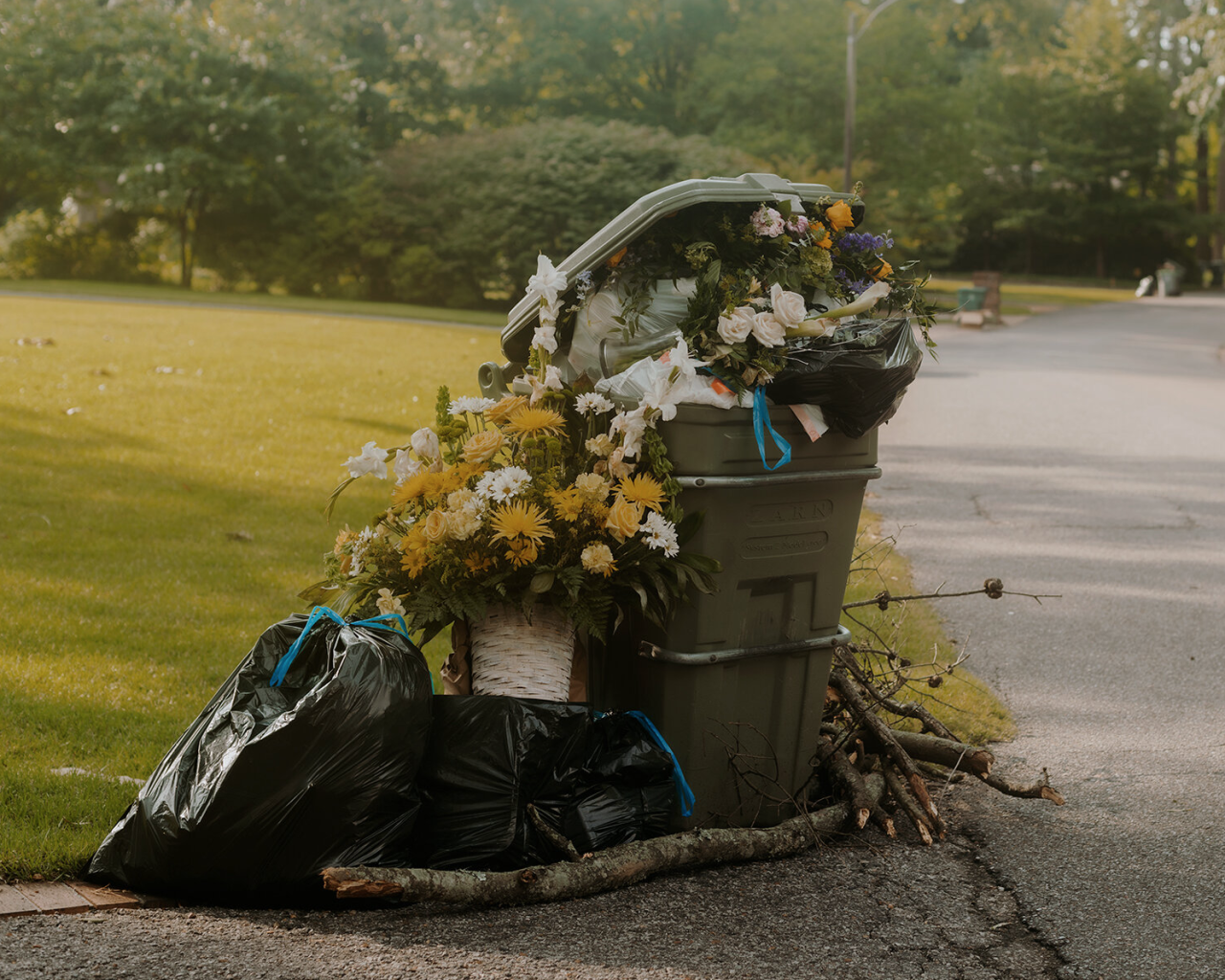
This is probably the most personal work I’ve ever made, maybe ever will make. I certainly don’t think it is complete, but it is where it is for now. The series basically looks at mine and my family’s experience of grief in the wake of my dad’s murder in June of 2019.
(Fuente)
En México los precios varían desde los 3 mil pesos hasta los 200 mil pesos.
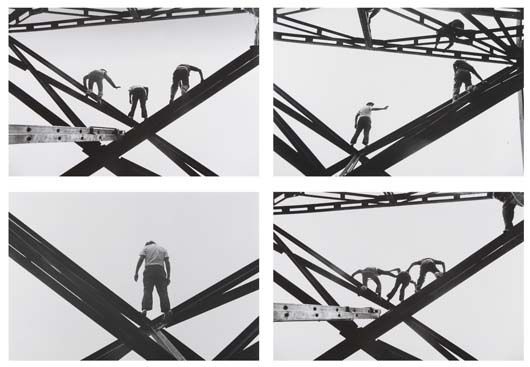
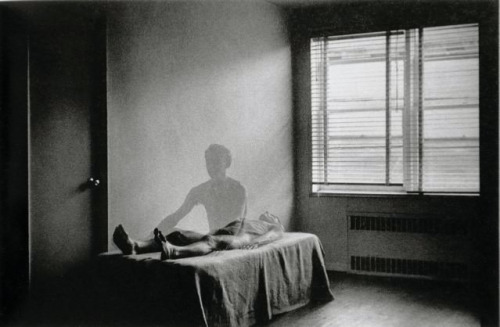
En The Spirit Leaves the Body (1968), una secuencia de
imágenes representa una figura translúcida que se separa gradualmente de un cuerpo tendido, visualizando el
concepto intangible de la muerte. Las imágenes, tomadas en blanco y negro con una calidad suave y onírica,
trascienden lo literal para explorar cuestiones metafísicas sobre el alma y la mortalidad, dejando al espectador
la tarea de lidiar con sus propias interpretaciones.
(Fuente)